Vacuum Bags vs Packing Cubes: Which Saves More Space? (2026)
By Product Team BlackVoyage
Vacuum Bags vs Packing Cubes: The Verdict
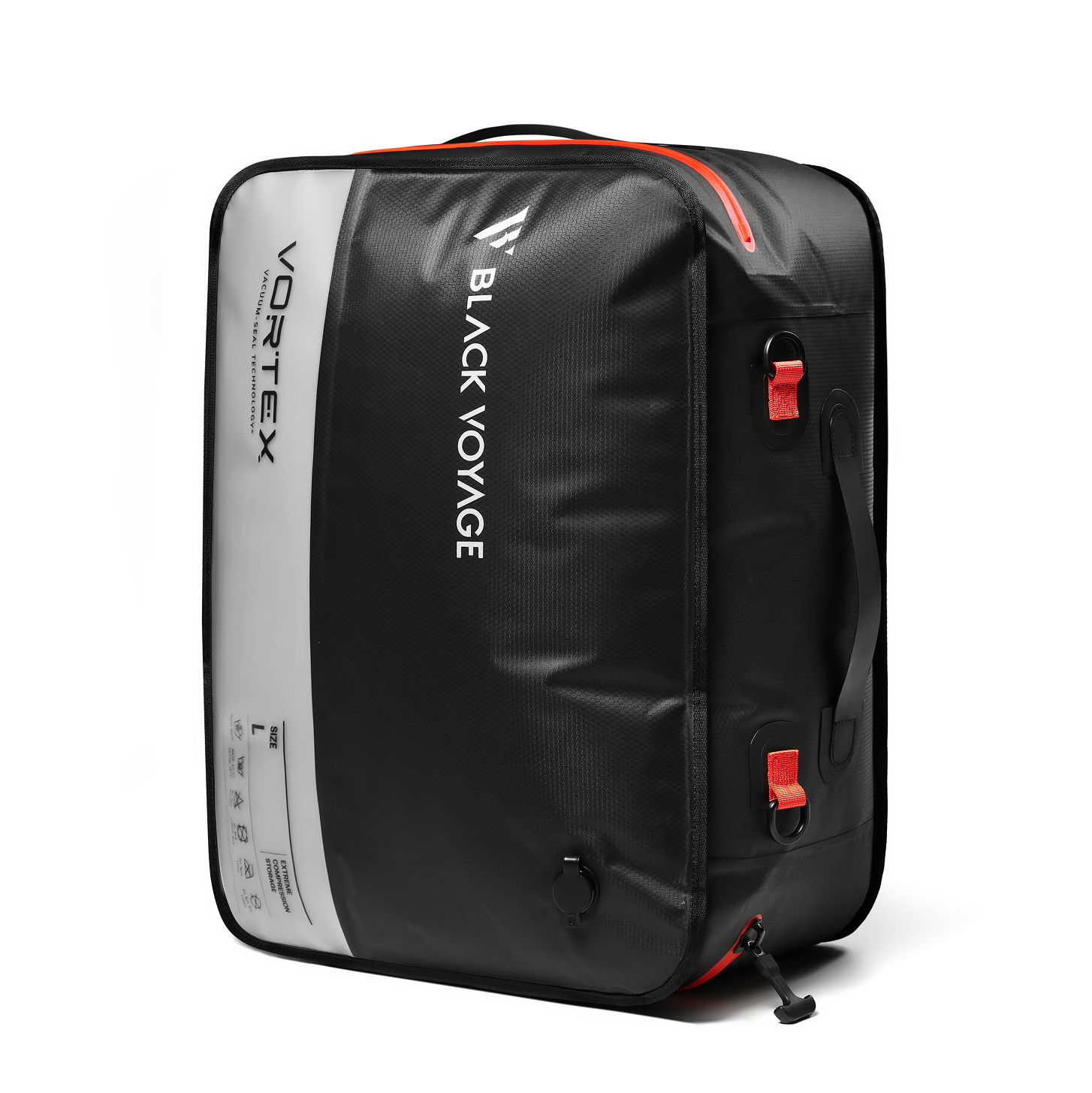
Vacuum compression bags win on raw space and wrinkle prevention — they pull air out, cutting volume up to 57% and holding that seal for a full week (a 168-hour hold, per BlackVoyage's product specification). Traditional compression cubes win on speed and organization, but their zippers only squeeze fabric; they remove no air. BlackVoyage's Vortex Seal Compression Cubes merge both approaches.
Pick vacuum for bulky soft goods and long trips. Pick cubes for quick access, frequent repacking, and structured, sort-by-category packing. Neither is universally "better" — the right choice depends on trip length, climate, and how often you open your bag.
Quick Comparison
Feature
Vacuum Bags
Traditional Compression Cubes
Vortex Seal Cubes (BlackVoyage)
Air removal
Yes
No
Yes (60 kPa pump, mfr. spec)
Space saved
Up to ~57%
Limited (no air removed)
Up to 57%
Wrinkle control
High (immobilized flat)
Medium
High
Quick access
Low
High
Medium
Weatherproof
Varies
No
IPX8-rated zipper
Reusable
Cheap ones tear
Yes
Yes, hydrolysis-resistant
Table 1: General category behavior. "Traditional compression cubes" means zipper/strap cubes that squeeze without extracting air. Percentage figures for BlackVoyage products are manufacturer specifications; category behavior for non-branded cubes is qualitative because published, comparable test data is not available.
What Are Vacuum Compression Bags?
Vacuum bags remove air from around your clothes so the fabric collapses flat. Less trapped air means less volume — and clothing pinned flat wrinkles less than clothing crammed loosely.
How Vacuum Compression Bags Work
A pump or roll evacuates air through a one-way valve, then a sealed zipper locks the vacuum in. The 70D nylon–TPU laminate chamber holds the pressure; a TPU membrane is the airtight barrier. In plain terms: the pump lowers the pressure inside the chamber, atmospheric pressure outside presses the walls in, and the fabric stack flattens — which is how the Vortex Seal reaches up to 57% volume reduction while a zip-only cube, having no sealed chamber, cannot. For the deeper mechanics, see how vacuum compression works.
Pros of Vacuum Bags
Maximum space: up to 57% volume reduction on puffy items.
Wrinkle prevention: fabric is immobilized, not free to crease.
Odor isolation: sealed gym clothes and wet towels stay quarantined.
Waterproofing: BlackVoyage cubes use an IPX8-rated zipper.
Cons of Vacuum Bags
Slower access: you break the seal to grab one shirt.
Cheap bags leak: bargain roll-up bags re-inflate — the roll-up vacuum bag experiences are covered separately.
Not for structured or delicate items: flattening is pressure, not heat, but tailored blazers and stiff silks hold creases; keep those out of a deep vacuum.
What Are Compression Packing Cubes?
Compression cubes are fabric pouches with a secondary zipper or straps that cinch contents tighter. They organize by category and modestly reduce loft — without removing air.
How Compression Cubes Work
You fill the cube, zip the main compartment, then pull a compression zipper that flattens the stack. BlackVoyage's non-vacuum Hydraulic Travel Packing Cubes use translucent TPU-laminated 70D ripstop with mesh dividers for sorting.
Pros of Compression Cubes
Fast access: grab a category without unsealing anything.
Organization: shirts, underwear, and tech stay separated.
No pump needed: works instantly, anywhere.
Consistent shape: rigid blocks stack predictably in a case.
Best for frequent repacking: if you unpack and repack every day, a cube you never have to re-seal saves real time and outperforms a vacuum bag on convenience.
Cons of Compression Cubes
Limited space gain: without air removal, the volume reduction is modest compared with a sealed vacuum chamber.
Weaker wrinkle control: cinching can crease more than flat compression.
No weatherproofing: standard cubes are not sealed against water.
Feature-by-Feature: BlackVoyage Specs vs Category Benchmarks
Spec
Vortex Seal Cubes
Airback (reported)
Standard cubes
Compression
Up to 57%
Claims 50% (marketing)
Limited (no air removed)
Compression hold
168 hours
Not publicly disclosed
N/A (no seal)
Pump suction
60 kPa, USB-C, battery-free
Lithium pump sold separately (~$75)
None
Water rating
IPX8 sealed zipper
Water-resistant, no IPX8 cert
None
Reuse
Hydrolysis-resistant, RF-welded seams
Undisclosed
Varies
Table 2: BlackVoyage figures are manufacturer product specifications, not independent third-party test results. Airback's 50% figure is a manufacturer marketing claim; we could not locate an independent, publicly linkable test to verify real-world performance, so treat it as unverified. Standard-cube behavior is described qualitatively for the same reason. Apply the same caution to every spec here: manufacturer claims (from any brand, including BlackVoyage) are self-reported until independently tested.
> "It has a couple tricks up its sleeve, but its main one is the vacuum compression bag that is built into the backpack." — Just Booked It
Cubes only — resealing a vacuum bag each day isn't worth it
Wet climate, beach, kayak
IPX8 vacuum cubes
Business trip, sort by outfit
Cubes for structure
Delicate or tailored garments
Cubes (or a garment sleeve) — skip deep vacuum
Mixed load, one-bag travel
Both — vacuum for clothes, cubes for tech
Table 3: Match the tool to trip length, climate, and access needs. Cubes alone are the honest pick whenever access frequency matters more than raw volume — you do not need to buy a vacuum system to pack a weekend or a business trip well.
Edge Cases: Altitude, Very Long Trips, and Delicate Fabrics
Altitude and cabin pressure: a sealed vacuum chamber can bulge slightly as external pressure drops on a flight or at high elevation, but the fabric stays compressed and the IPX8 zipper stays sealed; the effect is cosmetic, not a failure.
Trips longer than 30 days: the 168-hour compression hold is a specification for keeping items flat in transit, not a long-term storage guarantee. For multi-month travel, plan to re-pump when you repack rather than expecting one seal to last weeks.
Delicate fabrics: compression is pressure, not heat, so it will not shrink or scorch clothing. Structured tailoring and stiff silks still crease under any compression method, vacuum or cube — carry those flat or in a garment sleeve.
Can You Use Both Together?
the BlackVoyage 41L Vortex Seal vacuum compression cube
Yes — the strongest system pairs them. Vacuum-seal bulky clothing flat, then slot rigid non-vacuum cubes around it for the items you grab daily. In an AirCabin Pro or a Zephyr Pro 60L, this keeps compressed soft goods immobile while daily-access gear stays reachable.
> "between the combination of the expansion zipper and the star of the show, the built-in vacuum compression tech." — Nomads Nation
The Winner: How to Choose
Vacuum wins packing efficiency and wrinkle prevention; cubes win access and organization. Honest tradeoff: cubes are faster for a two-day trip, and skipping a pump is genuinely simpler — for many travelers, a set of well-organized cubes with no vacuum at all is the smarter buy. But for volume, sealed protection, and a seal that lasts from boarding to arrival, air removal is decisive.
This page focuses on the category decision (vacuum vs. cubes) for buyers choosing a system. For a scenario-by-scenario head-to-head using the same tools, read our vacuum bags vs packing cubes comparison, which is the canonical deep-dive on individual trip matchups; this article links to it rather than duplicating it.
Last updated: 2026-07-08. By the BlackVoyage Product Team. Specifications reflect current BlackVoyage product data (self-reported manufacturer specifications, not independent lab tests); competitor figures are reported third-party or marketing data and are unverified where noted.
Frequently Asked Questions
What is the difference between vacuum compression bags and compression cubes?
Vacuum bags pump air out to cut volume up to 57%. Compression cubes only cinch fabric with zippers or straps, removing no air, so their space gains are modest because trapped air stays put.
Are vacuum compression bags better than compression cubes for packing clothes?
For space and wrinkle control, yes. Air removal flattens and immobilizes fabric. Cubes win for fast daily access, frequent repacking, and category organization on shorter trips, so "better" depends on how you travel.
Do vacuum bags maintain compression better than compression cubes?
Yes. BlackVoyage's sealed chamber holds compression for 168 hours (a manufacturer specification). Cheap valve bags leak; standard cubes hold no vacuum at all since they trap air.
Can compression bags be reused?
Quality ones can. BlackVoyage Vortex Seal Cubes use hydrolysis-resistant TPU with RF-welded seams built for repeated compression cycles. Bargain single-valve bags often crack or leak fast.
Do compression bags damage clothes?
No, for reasonable use. Compression is pressure, not heat. Avoid long-term storage of delicate silks or structured blazers; keep those in a protected zone, not vacuum-sealed.
Are packing cubes TSA-approved?
Yes. Packing cubes and vacuum cubes both pass security screening. Neither is restricted. BlackVoyage's battery-free USB-C pump is flight-safe with no lithium battery to declare.
Can I use vacuum bags and compression cubes together?
Yes, and it's the best system. Vacuum-seal bulky clothing flat, then pack rigid non-vacuum cubes around it for tech and items you access daily.
Should I use vacuum bags or compression cubes for travel?
Vacuum for long trips, bulky layers, and wet climates. Cubes for weekends, structured access, and days when you repack constantly. One-bag travelers get the most from combining both.